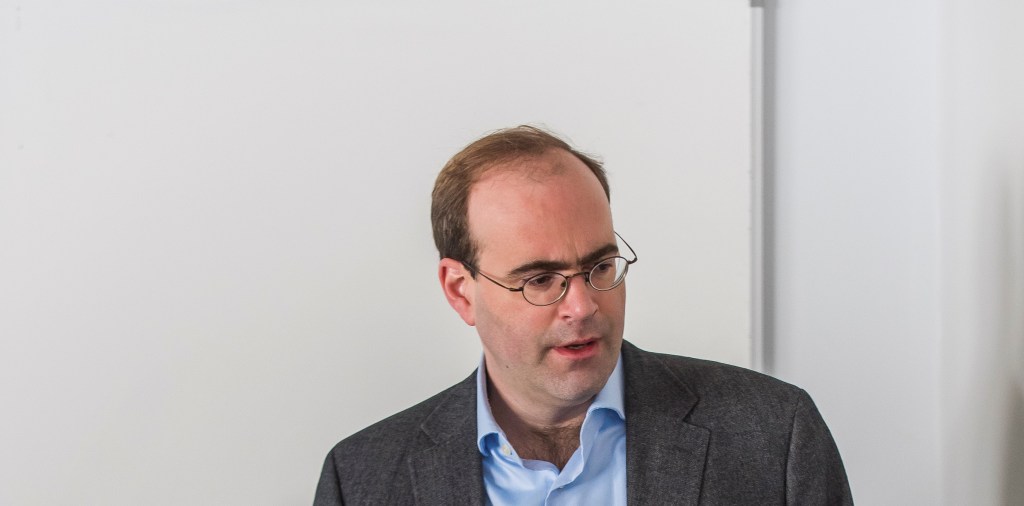
I am Professor of Experimental Philosophy at the University of East Anglia. Experimental philosophy (X-Phi) adapts empirical methods from the social sciences to address philosophical questions and problems. I am interested in philosophical cognition, the philosophy of philosophy, and philosophical problems about perception and consciousness. I convene an interdisciplinary X-Phi research group. Together with psychologist Paul Engelhardt, I examine verbal reasoning about vision and consciousness. A new Templeton project examines, empirically and cross-culturally, how philosophy improves our minds: how education in different philosophical traditions (analytic, Buddhist, Confucian, and Thomist) cultivates epistemic virtues (wisdom, reflectiveness, intellectual humility and curiosity).
Experimental philosophy
of experience
I am interested in philosophical problems about perception and conscious experience, and in the cognitive science of language comprehension, judgement and reasoning. My colleagues and I study how automatic cognition shapes philosophical thought, and how findings about philosophical cognition help address some philosophical problems about perception and consciousness. We hypothesize that problems including the ‘problem of perception’ and the ‘hard problem of consciousness‘ can be overcome through empirical insight into their cognitive sources. We focus on two cognitive sources: conflicts between fragmented folk beliefs and comprehension biases. We thank the British Academy and the Fritz-Thyssen Foundation for support of the live projects ‘Fragmented beliefs’ and ‘Experimental argument analysis: Reasoning with stereotypes’.
Collaborators
Much of my work is collaborative. Recent and ongoing projects involve:
Keith Allen (York, UK)
Paul Engelhardt (UEA, UK)
Aurelie Herbelot (Trento, Italy)
Nat Hansen (Reading, UK)
Joachim Horvath (Bochum, Germany)
Edouard Machery (Pittsburgh, USA)
Hiroshi Ohtani (Tokyo, Japan)
Justin Sytsma (Wellington, NZ)
Stereotypes and metaphors in philosophy
Much of my work studies how automatic inferences involved in language comprehension shape natural language reasoning, in philosophy and beyond. The focus is on how stereotypes and metaphors shape intuitions and reasoning, in philosophical thought experiments and arguments. Three interrelated research projects extend the methodological and philosophical scope of X-Phi and are now generously funded by the Fritz-Thyssen-Foundation (project summary here):
Psycholinguistics for
X-Phi
My experimental work with Paul Engelhardt and further collaborators explores how to adapt sophisticated methods from psycholinguistics for new uses, in X-Phi. These methods include pupillometry, reading time measurements with eye tracking, and cross-cultural psycholinguistics. We also use distributional semantic analysis.
Experimental ordinary
language philosophy
The critical strand of mid-20th century ‘ordinary language philosophy’ sought to expose verbal fallacies in reasoning that motivates philosophical questions. This can help ‘dissolve’ philosophical problems like the ‘problem of perception’. Our projects provide fresh experimental methods and new empirical foundations for this resurgent enterprise, and for the examination of how ordinary discourse constrains linguistic innovation (‘conceptual engineering’), in philosophy and beyond. Our findings even help develop some metaphilosophical ideas from Wittgenstein and his followers!
Experimental
argument analysis
We use psycholinguistic methods to study automatic comprehension inferences and deploy findings to assess
reconstructions of philosophical arguments. For proof of concept, we have analysed influential arguments from the philosophy of perception: the argument from illusion and the argument from
hallucination. Experimental findings support novel reconstructions
that expose previously overlooked fallacies.
Recent books
The monograph Philosophical Delusion and its Therapy draws on philosophical case studies, models from cognitive therapy, and findings from cognitive psychology to develop and assess ‘diagnostic/therapeutic’ conceptions of philosophy in the wake of J.L. Austin and Ludwig Wittgenstein. The edited collection Experimental Philosophy, Rationalism and Naturalism (with John Collins) discusses how X-Phi reshapes and advances longstanding debates about philosophical method. The edited volume Methodological Advances in Experimental Philosophy (with Mark Curtis) explores how sophisticated empirical methods from the behavioural sciences and the digital humanities can be adapted for X-Phi. The Topical Collection Experiments and Ordinary Language Philosophy (OLP) (Synthese, with Nat Hansen) examines how methods from X-Phi can be used to develop and transform philosophical agendas from OLP. I am currently working on a monograph: Diagnostic Naturalism: The Experimental Philosophy of Aporetic Problems explores how such problems can be overcome (‘dissolved’) through empirical insight into the cognitive processes that drive their formulation. The book provides proof of concept for the new approach through a case study on the problem of perception. The focus is on biases in verbal reasoning and conflicts between fragmented folk beliefs as sources of the problem. I have also contributed to a textbook: Experimental Philosophy for Beginners. Further books and publications here.
 Eugen Fischer